Publication Abstract
- Title
-
Marine monitoring strategies - What do bio- and chemosensors have to offer?
- Publication Abstract
-
Marine monitoring strategies - What do bio- and chemosensors have to offer?
S.Kroger, S.J. Malcolm and D.K. Mills
The need to monitor the marine environment originates for a number of different reasons including environmental protection, impact assessment, compliance monitoring, human health concerns, and academic interest in fundamental processes, such as the structure and function of the ecosystem. Long term monitoring is increasingly recognised as a key strategy in detecting environmental change and identifying its causes (natural, climatic or anthropogenic) and forms the basis from which effective management strategies for sustainable use and protection of the marine environment can be developed.
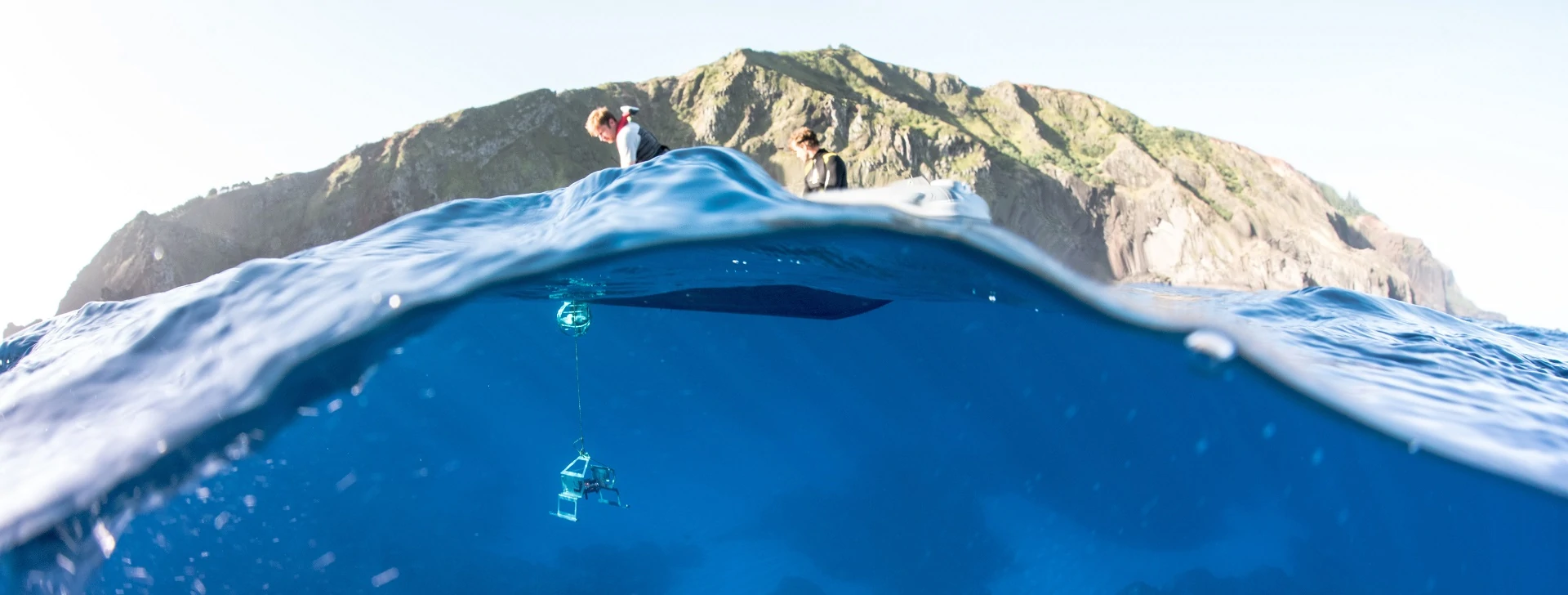
Measurement and monitoring of the marine environment by survey vessel alone is costly, time-consuming and provides a relatively infrequent dataset against which to assess environmental change. To meet the need for improved assessment of ecosystem change over appropriate temporal and spatial scales new approaches based on continuous or semi-continuous observations are required. In order for such density of observations to be obtainable they have to be made immediately in the field and preferably autonomously in situ. Therefore new monitoring strategies rely on the availability of novel types of instrumentation, such as exchangeable and adaptable sensor packages, or on simple, portable, low-cost detection systems for field-measurements, which can be used by nonspecialists. Some of these new types of instrumentation will be described below in more detail.
Reference:
S.Kroger*, S.J. Malcolm* and D.K. Mills* (2000) Marine monitoring strategies - What do bio- and chemosensors have to offer?. Proceedings of Oceanology International 2000, Brighton, UK 7-10 March 2000
- Publication Internet Address of the Data
- Publication Authors
-
S.Kroger*, S.J. Malcolm* and D.K. Mills*
- Publication Date
- January 2000
- Publication Reference
-
Proceedings of Oceanology International 2000, Brighton, UK 7-10 March 2000
- Publication DOI: https://doi.org/